
What Stays, What Changes? Reflections from an HMC Roundtable with Independent School Heads
Author: Simon Burgess and Taryn Kallie
Date: October 07, 2026
We are in what feels like both an exciting and un-nerving time of change for schools, with demands coming from a range of drivers, stakeholders and worldly unknowns. One of the outcomes of this can be the opportunity and need for some schools to merge, be acquired or make fundamental changes such as becoming co-educational. This confronts us with a range of logistical, cultural and identity challenges, requiring those schools and their leaders to ask themselves: ‘What stays, what changes?’.
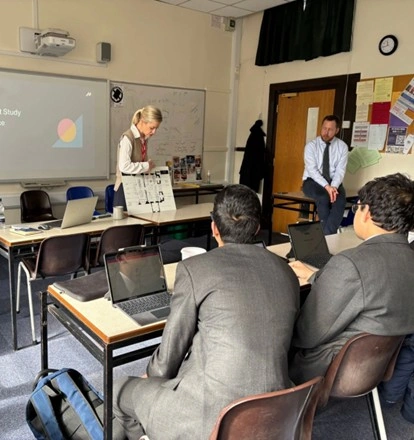
At the recent HMC Head’s Conference, we hosted a roundtable to discuss this question with a range of Heads, each navigating an upcoming, current or future change. The key elements we presented and that emerged from the discussion gave plenty of food for thought:

How can we navigate change?
The short answer can be summarised in two words - ‘consciously’ and ‘intentionally’. Though we shared many challenges around the table, it was clear that the need to proactively design, lead and communicate change cannot be understated. No change leadership will ever be perfect for all stakeholders, but demonstrating consistent effort, care and intention can certainly put us in the best possible place. This will be well received by those experiencing the change, and is best made explicit to help others realise where we are constrained, yet have worked hard to consider others (e.g. in the legal constraints around consultation and sharing any decision).
One key element highlighted was that of intentional planning and the ability to view such changes as transitions, rather than events. If change is the event of schools merging, or the first year of co-educational schooling, then the transition is the journey that we all go on before, during and in the years after. It’s crucial to consider the journey as one that will naturally ebb and flow, meaning we should try not to over-react in one single instance and also maintain effort in supporting others as they navigate the different stages.
Another key element was the need to narrate and differentiate that journey for the various stakeholders affected - firstly by identifying them and their needs, and secondly by curating various ways they can engage and be part of that journey with you. This applies not just for current students, staff, parents, partners and local community, but also those past and prospective. Humans naturally have a desire to feel seen, considered and ‘in on’ a journey, which can help us to let go, evolve or grow into a new identity. Within that, anchoring around the ‘why’ for the transition, and how this better serves future students, remain core.
Finally, a theoretical framework can strongly help to organise that planning - taking the complexity of a vast range of needs and perspectives, and giving some structure with which to work through it. One such model is defining the tangible ‘levers’ that drive culture in our school(s). If school identity is the outcome of all the hard work we do, then it is the culture that drives every day experiences, that shapes that outcome. One such model can be to consider the following three culture levers, and how we can ensure they are aligned:
- Beliefs, mindsets and behaviours
- Symbols, stories and rituals
- Systems, processes and environments
Though the systems, processes and environments are the most fundamental and usually most urgent, individuals and groups tend to emotively experience the others in stronger ways. If these three levers are not in alignment, or equally attended to, our stated vision and the lived experience of those around us can quickly feel discordant. Focusing on each of these levers, and doing a few things within them, really well, can lead to a strong and balanced building of culture and school identity.
What are some lessons learnt from those who’ve been through it?
Whilst maintaining anonymity for those who contributed to such a rich discussion, some general themes in lessons learnt can be shared as:
Even the best prepared mergers can feel hard or a surprise, but that emotion will dissipate with time. Subconsciously, a change to a school identity can feel like a threat to an individual's sense of identity (and therefore personal security). Expecting that some people will feel that, and giving them space and time to be heard and let go, can help mitigate the risk of being too responsive to those who shout the loudest. One example shared was that of the anxiety from students and parents in the build up to the evolution of the school logo which, once it had changed, disappeared into a ‘non-event’. This is in contrast with feeling the need to ‘react to the noise’ in the moment, which can lead to neglecting to implement a beneficial programme (e.g. a different example where it was felt a school merger was unnecessarily abandoned, due to parental anxiety at the time).
Identifying the opportunities in the transition, and selling the potential benefits, can help people move to a place of acceptance and excitement. Humans are hard-wired to avoid loss of what we feel we have. By promoting the opportunities in the transition (rather than the perceived loss in the change), we can better engage stakeholders as part of that journey, and even give small opportunities to help build the future culture, identity and heritage. For example, one school’s merger created capacity on their new campus to create a wellbeing hub, extended gym, sixth-form centre/cafe, and improved dining facilities.
Change events have likely happened throughout your schools’ history. Framing the present as part of a long chain of historic transitions, can help people to let go. It can help challenge incorrect assumptions or snapshots in history that people hold onto as ‘the whole identity’. Once framed in the bigger picture and the need for education to be forward-looking, this can help to normalise this as ‘something we’ve always done, and will continue to do’. One example referenced strong alumni opposition to incorporating football into a ‘rugby school’. Reframing this and highlighting that football had been played there previously (until 1926), quickly dissipated any objection.
Middle leaders carry the culture, and need to be supported by the right structures and alignment. They are vital stakeholders and influencers (or detractors) in bringing a new culture to life in the day-to-day rhythms, rituals, mindsets and behaviours for students and staff alike. The transition likely won’t suit everyone, but that’s OK. Proactive team-building through clear, open and empathetic conversations can help those people to get on-board or vote with their feet.
Consistency and sustained effort are needed. The transition journey before, during and years after a change requires individuals, teams and organisations to be consistent. Mapping the various touchpoints you have with each stakeholder, and how you maintain this consistency, can be incredibly helpful. Also, it’s essential to consider how you as a leader can sustain yourself, seek support from those around you, and distribute the load to maintain that momentum.
Students are why we do it, and are perhaps the best role models. Fundamentally, it’s important to remain clear that any transition will create sustainability and opportunities not only in the present, but also for future students. Young people are incredibly good at adapting to change so if a transition is best for the longevity of the school, the pupils will be accommodating and adapt. Perhaps we can all take a lesson from them.
Ultimately, our advice is to be proactive, be intentional, and design a few strands of consistent engagement. For us all, we should expect that big emotions will come, but that they will also dissipate into opportunities and growth.
[NOTE: For further reading from a human-centred perspective, see William and Susan Bridges’ Transition model or book ‘Transition: making sense of life’s changes’].
How does this relate to the SPACE model?
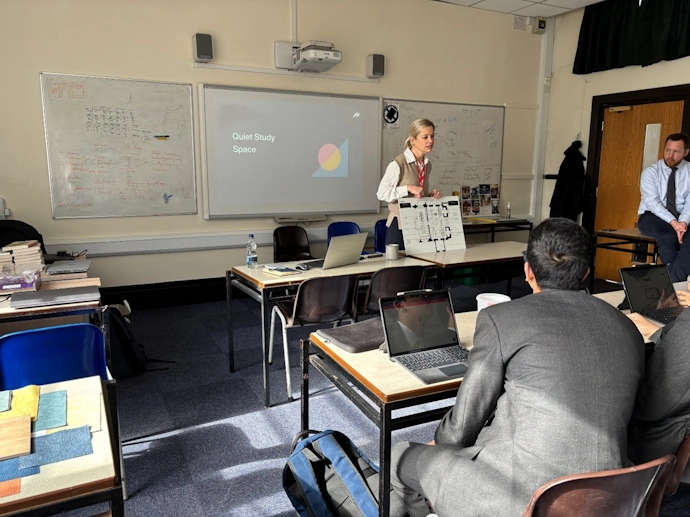
The SPACE model is a practical framework that supports schools in designing learning environments aligned with the evolving needs of students, staff, and their educational vision. It was designed around three simple principles when leading change and transition:
No one knows their needs or scenario better than the person in it - identify those groups, give them space to be heard and provide input, and continue to seek their feedback as the environment evolves.
Start with the big picture and then work down to the details - aligning your environments and individual needs with the vision of your school, can provide you with a holistic and long-term roadmap for developing coherent learning environments that enable schools to thrive.
Continue to listen, proactively seek feedback and give stakeholders a voice - along that roadmap, seeing what works, what can evolve and what might need to be let go of, means that your school estate can continue to evolve to the needs of its communities.
Related Blogs and Whitepapers

Classroom design and layout: 6 ways to create flexible learning spaces in your school
February 25, 2025

How To Cater For Social Distancing And Other Measures In School Design
July 26, 2022

Pinnacle Named Top-Ranked Supplier For Fitted Furniture On New DfE Furniture Framework
July 26, 2022