
How contractors can reduce FF&E risk on education projects
Author: Mark Allen
Date: November 03, 2026
When a contractor delivers a new school, college or learning space, the final stages of the build can be challenging. Several trades need access, unfinished areas can delay progress, and a fixed completion date leaves little room for manoeuvre.
For the furniture, fixtures and equipment (FF&E) team, this often means less time to complete an installation, which can impact the contractor’s schedule and costs.
‘The end date often doesn’t move very far, but our programme often gets compressed,’ says Mark Allen, Operations Director at Pinnacle. ‘The risk there is that we don’t have enough time to complete our installation.’

Mark suggests that contractors and FF&E partners start planning together early on. FF&E isn’t an add-on that slips neatly into place at the tail-end of a project; it must be considered from the start.
Contractors should coordinate with their FF&E partners on design and understand how furniture will be ordered, delivered and installed.
Plan classroom design and building services together
Classroom layouts and building services should be planned together because the mechanical, electrical and plumbing (MEP) team must know where furniture and equipment will sit so connections are in the right places when installation begins.
Poor coordination can leave holes in the floor for cables and piping in the wrong position, which creates problems when work is already advanced.
‘FF&E planning has to go right back to the beginning,’ Mark says. ‘Because so much of a build interacts with it.’
Understanding the FF&E package early gives the contractor and specialist trades time to identify those vital interfaces and agree on what each team needs to provide. Are the layouts coordinated? Do the services match the furniture positions? Have changes been communicated to everyone whose work they affect?
If there is a mismatch between the design and what has actually been built, putting it right can be expensive.
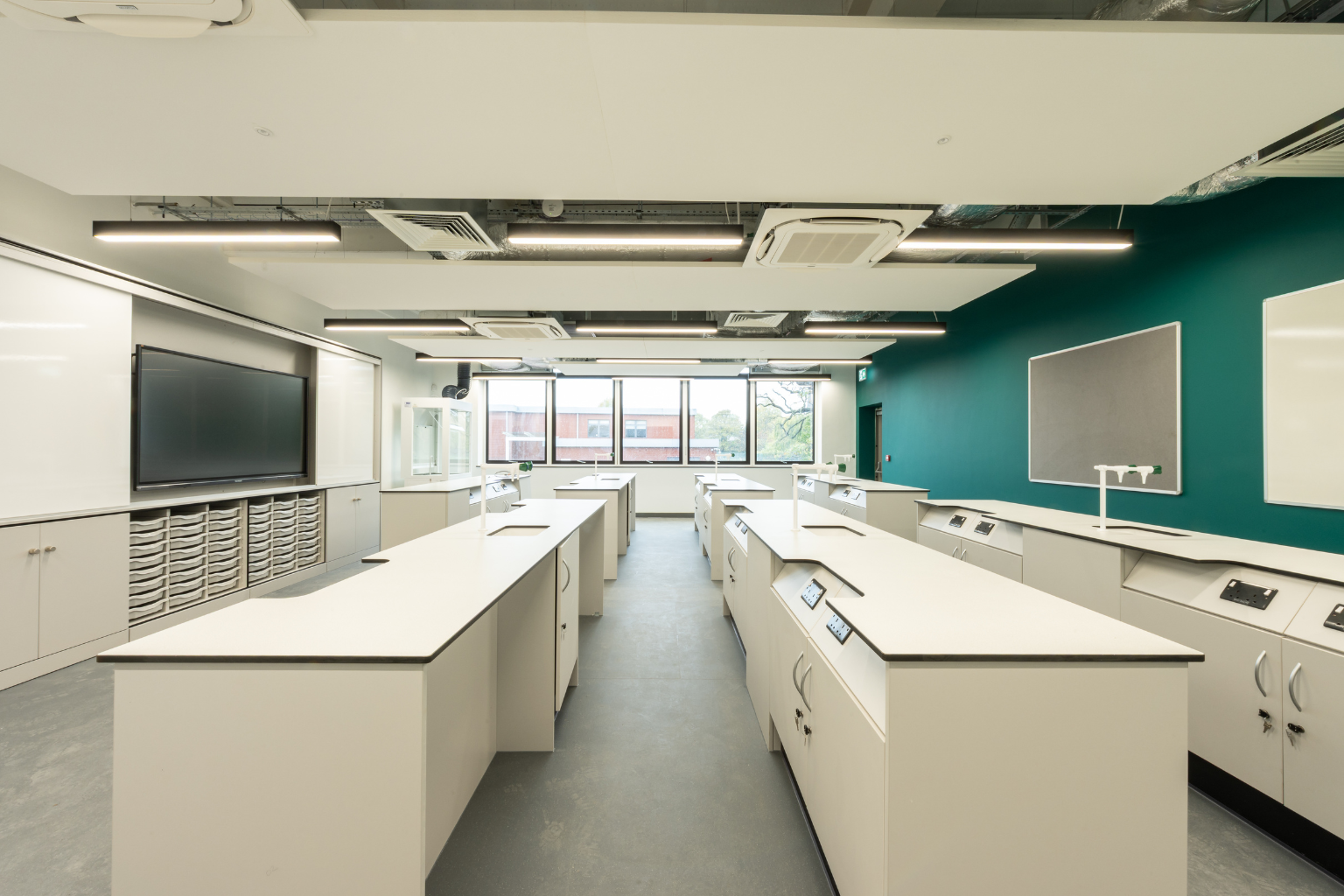
Ricards Lodge Sixth Form
Set realistic deadlines
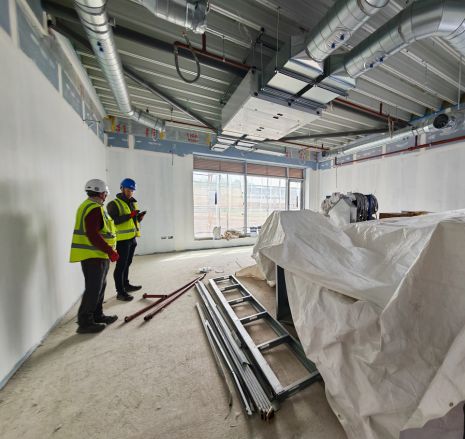
FF&E is a finishing trade, so installation depends on rooms being ready for the team to work in. Floors, ceilings and decoration all influence whether the installation can proceed as planned.
‘We often face problems with areas not being ready for us, so floors not down, ceilings not in, decoration, things like that,’ says Mark. "We're a finishing trade, and we’re often coming into a very, very busy construction site, which often hampers us.’
For contractors, setting an achievable installation date is essential, particularly for loose furniture. If products are ready but rooms are not, the furniture may need to go into storage, with deliveries rearranged and further transport organised once the site can receive it.
The scale is easy to underestimate. Mark estimates that a typical classroom’s loose furniture could occupy around eight pallets. Across a large school, that becomes a hefty storage requirement.
It also creates extra cost and a logistics headache. A realistic schedule must account for when rooms will actually be ready to receive furniture and how much time the installation team needs.
Break furniture delivery into zones
Risk can be reduced before any FF&E items reach the site. For example, Pinnacle processes orders in zones, breaking each package into smaller sections so that deliveries can follow the installation sequence. Where the contractor hasn’t designated sections, Pinnacle creates its own breakdown.
This limits the amount of product on site and gives the team flexibility to adjust the sequence if a particular area falls behind.
The approach proved successful at Fairwater, a large project involving four buildings on one site in Wales. By working in zones, the team could finish an area, get it signed off and move to the next without having large quantities of furniture waiting around.
Describing the benefits of zoning, Mark says: ‘We’ve got a clear idea of what’s coming when. Once we’re finished in a section, we just move on to the next one.’
For the main contractor, this makes deliveries, access requirements and progress easier to coordinate with the wider schedule.
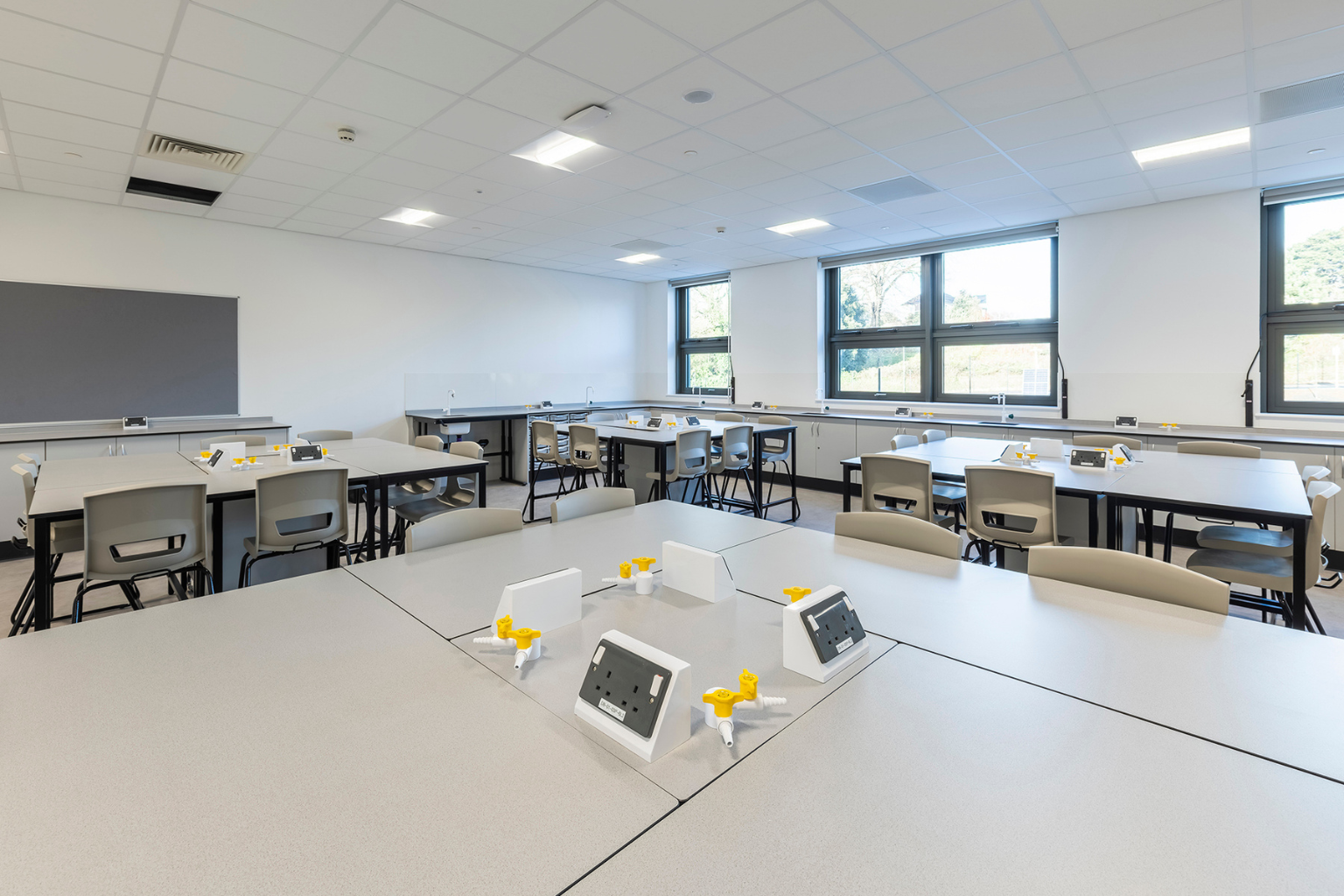
Fairwater Community Campus
Stay in control of changes
Working with FF&E providers early creates opportunities to resolve problems, but coordination needs to be ongoing.
Mark has seen an increase in client changes over the past couple of years, and processing these requests and associated contract variations takes time and effort.
Contractors must ensure revisions are clearly recorded, communicated and considered alongside their impact on other aspects of the build. A change to a classroom layout can affect the MEP services coordinated around it.
Mark also highlights continuing supply chain pressures and raw material inflation. These add to the importance of understanding how revised requirements could affect procurement and delivery.
Priorities for a smoother installation
Mark’s advice centres on three things: securing the FF&E package early, dividing the work into zones and setting realistic dates for loose furniture installation.
Each addresses a recurring risk, from services in the wrong place to congested work areas and avoidable storage costs. Getting these details right gives contractors a smoother route to completion.
Related Blogs and Whitepapers

Classroom design and layout: 6 ways to create flexible learning spaces in your school
February 25, 2025

How To Cater For Social Distancing And Other Measures In School Design
July 26, 2022

Pinnacle Named Top-Ranked Supplier For Fitted Furniture On New DfE Furniture Framework
July 26, 2022