
How an FF&E partner can help a construction firm at the tender stage
Author: Matt Hoy
Date: November 04, 2026
When a main contractor is preparing an education-sector bid, finding a good FF&E partner is essential because involving them early can have a far-reaching impact, affecting everything from compliance through to services and ultimately, whether a new learning space works for the people using it.
Contractors need an FF&E partner they can trust: someone with experience, not simply to provide furniture layouts and budgets, but to strengthen a tender submission, identify hidden risks, challenge assumptions and help deliver a bid that is both competitive and buildable.

“FF&E is about much more than putting furniture into a building,” says Matt Hoy, Senior Design Consultant at Pinnacle. “It’s about creating learning spaces that work for all aspects of school life, such as teaching, and coordinating them properly with all the other trades and design consultants involved in the design.”
Start by interrogating the brief
On an education project, FF&E involvement usually kicks off once the massing, room areas and adjacencies of the building have been established, although earlier input can sometimes be valuable.
The first task is to examine the tender information closely, including the client project brief and feasibility study. What’s being requested? What has been allowed for? Is the budget realistic? Are there specialist spaces or user requirements that need particular attention? Are there gaps or ambiguities that should be raised with the contractor?
“Contractors need confidence that their tender accurately reflects the client’s requirements,” says Matt. “If something has been missed at bid stage – whether that’s accessibility requirements, specialist equipment coordination or infrastructure allowances for FF&E – it often becomes far more expensive to address later.”
A good FF&E specialist won’t just accept a brief - they’ll interrogate it. “Our role is to ask the right questions. For example, we might be given a feasibility-stage budget, and we’ll ask: does that feel light, what does it actually include and is everything accounted for?”
Relevant experience matters. A secondary school, further education college and specialist learning environment don’t have identical needs and an FF&E partner should understand the distinctions and be able to demonstrate appropriate knowledge through its team, previous projects and approach.
Coordinate furniture with the building
The idea that FF&E begins and ends with loose furniture is one of the biggest misconceptions in procurement.
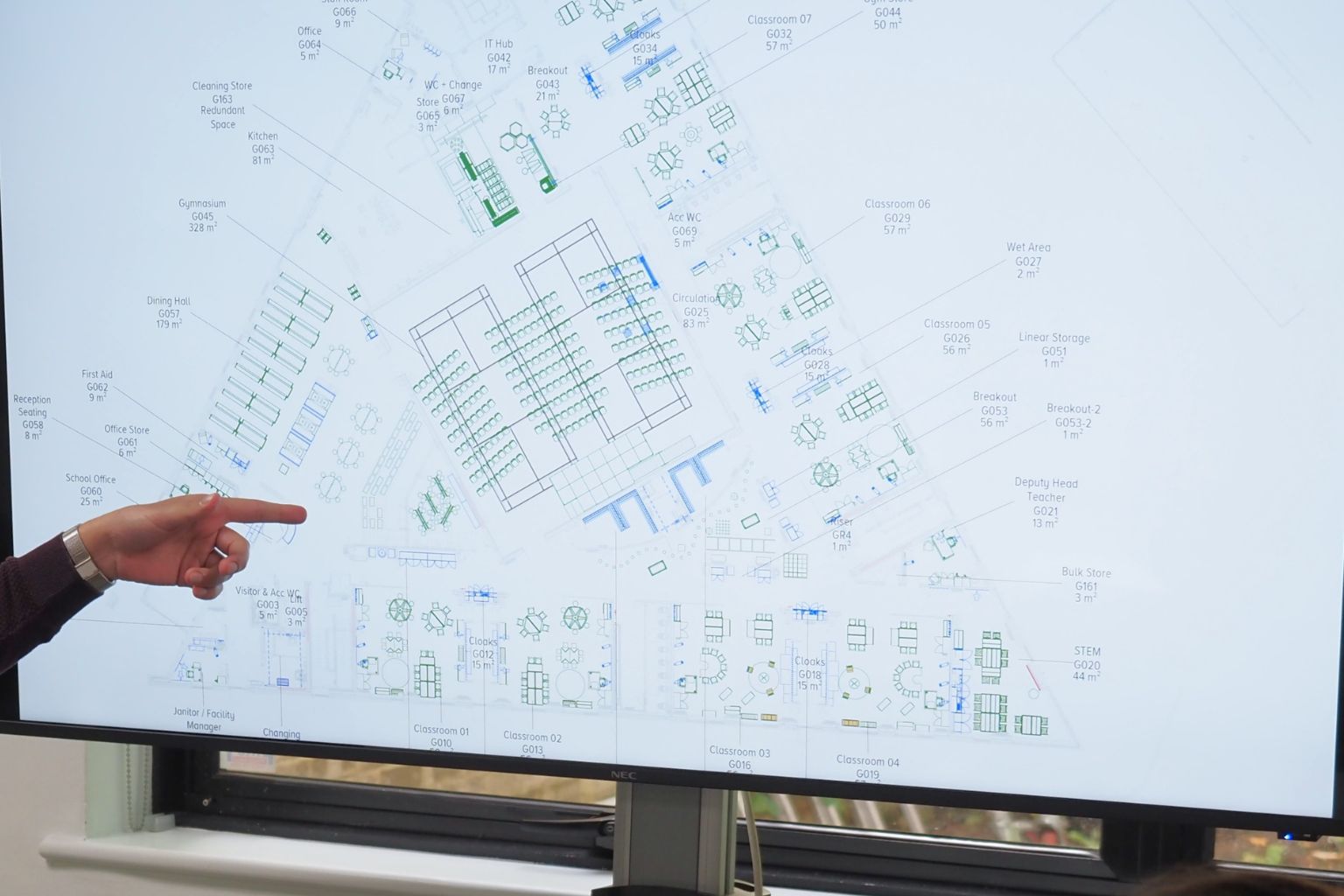
A good learning-space design must be coordinated with the architect, mechanical and electrical consultants, structural designer and other members of the multidisciplinary team. The positions of power, data, plumbing, and drainage can all be affected by how a room is furnished and used. Misplace them and the cost to rectify could be considerable.
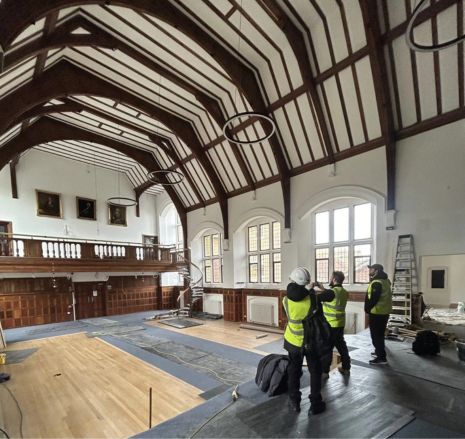
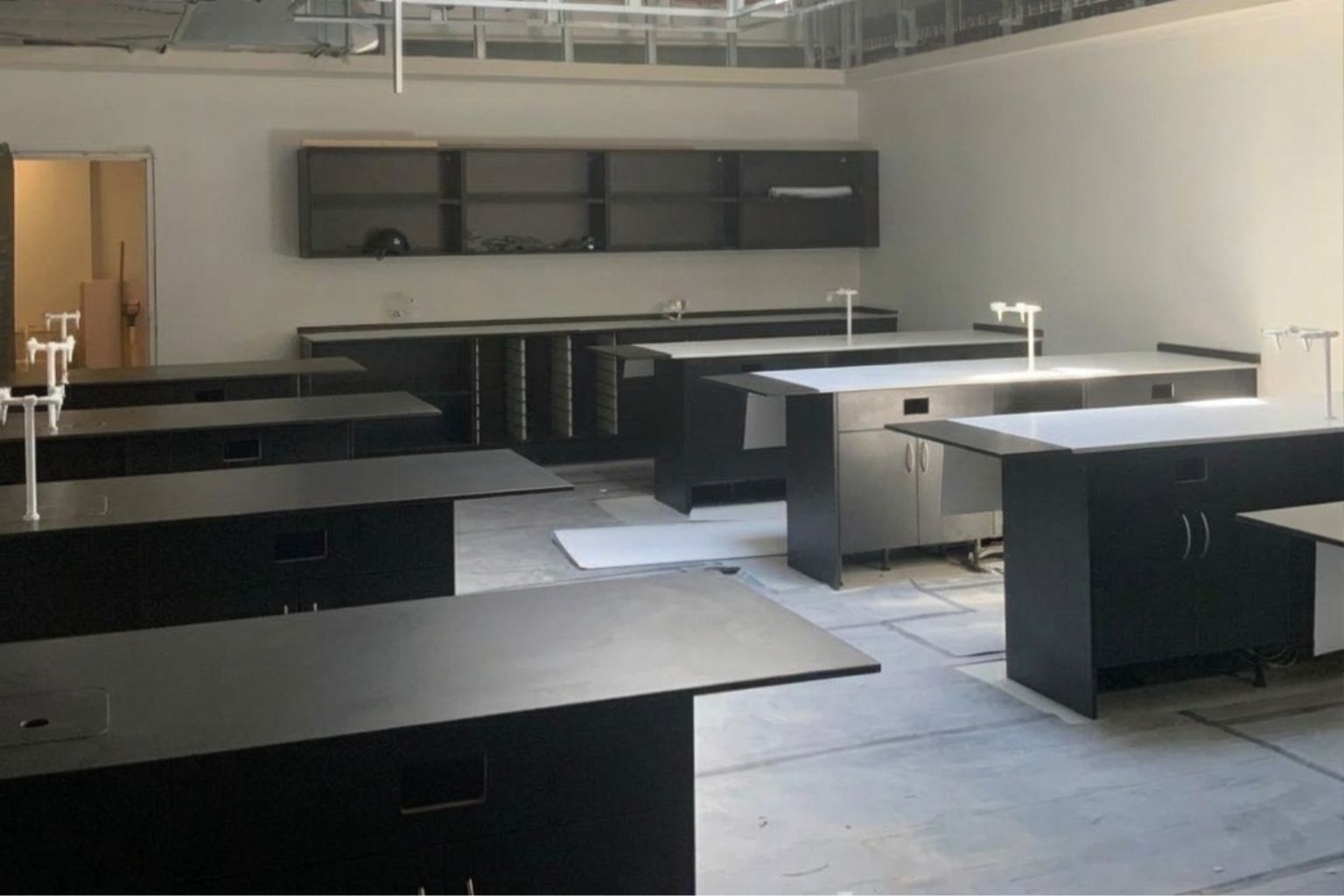
“Pattressing is a classic example,” says Matt. “When you are fitting heavy items onto a wall, such as basketball hoops, it’s very difficult to put the secondary steel support in at a later date. We’ve been brought in late on projects where pattressing had been missed for things like cupboards, and the contractor had to cut holes in the plasterboard and fit timber or ply panels. It is very difficult, very expensive and totally avoidable.”
Kingston Grammar School
Build a budget that will survive delivery
Tender-stage value engineering shouldn’t mean automatically selecting the cheapest product. It means understanding where investment will have the greatest impact and finding solutions that meet the brief within the available budget.
An experienced FF&E partner can present different levels of specification, giving the contractor informed choices without compromising essential function, durability or compliance.
“You don’t have to gold-plate everything,” says Matt. “We can take a good, better, best approach because we understand what the different options mean for the price and the design.”
Cost plans also need to reflect the likely procurement date rather than today’s price. Appropriate inflation allowances must be considered alongside lead times, design periods, installation requirements and phasing, particularly where works need to accommodate the academic calendar.
Matt explains: “We build an inflation allowance into our budgeting based on the current rate and what our supply chain is telling us. We can also help to programme the design work and installation, and advise on the most effective phasing.”
Existing furniture is another important part of the calculation. A legacy furniture survey can identify items suitable for reuse in the new building. This can reduce unnecessary expenditure and waste, but only if reuse, relocation and integration are properly planned rather than assumed.
Prove competence, not just capacity
Contractors increasingly need partners who can demonstrate competence. That may include knowledge of Building Regulations and accessibility requirements such as Part M, British Standards, Department for Education guidance and technical manuals.
Digital capability is also increasingly important. FF&E information must integrate with the contractor’s information-management and BIM processes, rather than sit in a separate design silo.
Good practice must be embedded within a business - compliance resources, staff training and clear checking procedures help designers apply the right standards consistently across different room types and specialist packages.
Understand how the space will really be used
The best bid submissions demonstrate that the team has listened to the client and understood how the building needs to function.
Schools and colleges will often have specific operational requirements, from storage and display preferences to teaching methods and relationships between departments. Some education buildings must also serve wider communities, incorporating meeting areas, health services, event spaces or public-facing training restaurants and salons. These spaces may need to work for different audiences at different times without losing their primary educational purpose.
An FF&E partner should be able to extract those priorities from the brief, test them during consultation and translate them into workable designs.
Responsiveness is key for an FF&E provider
Tender teams are frequently managing several live bids under intense time pressure. Responsiveness is essential. Information must be clear, accurate and delivered when promised. The FF&E specialist must be comfortable attending meetings, answering queries and working as part of the wider design team.
Continuity matters too. If the bid succeeds, the knowledge developed during tender should carry into client engagement, detailed design, and installation. A partner who already understands the brief, budget and identified risks can hit the ground running.
“There are often massive time pressures on these projects,” says Matt. “If you’re dealing with somebody who already knows the project, you can move forward quickly. There is continuity, and many of the pitfalls, challenges and risks have already been identified, so they don’t come as a surprise.”
For a main contractor choosing an FF&E partner, the most useful question is this: “Will the team help us identify risk, strengthen our bid and deliver a learning environment that works?”
FF&E may be installed towards the end of a build, but it should never be left until the end of the thinking.
Related Blogs and Whitepapers

Classroom design and layout: 6 ways to create flexible learning spaces in your school
February 25, 2025

How To Cater For Social Distancing And Other Measures In School Design
July 26, 2022

Pinnacle Named Top-Ranked Supplier For Fitted Furniture On New DfE Furniture Framework
July 26, 2022