
Designing classrooms for AI: how schools can prepare for the future of learning
It’s no longer a question of if artificial intelligence becomes integral to education in the UK, or even when. That moment has already arrived, and what matters now is how we work with it for the benefit of teachers, children and wider society.
At the Global AI Safety Summit in London, UK, Education Secretary Bridget Phillipson said AI “can be the biggest boost for education in the last 500 years,” likening its potential impact to the invention of the printing press, but she also emphasised the need for strong safety standards and human oversight. Her remarks show this debate has already moved from theory into urgent practice.
For schools, the challenge goes well beyond introducing new software. It means rethinking how learning happens, how children are safeguarded, and how classrooms are designed so that AI sits alongside, not in place of, teachers. From flexible layouts that enable immersive learning to spaces that support collaboration, focus and well-being, the physical environment must evolve as quickly as the technology.
AI in education doesn’t exist in a vacuum. Government guidance emphasises that it should enhance and not replace human teaching and that safety, data protection and curriculum alignment must come first.
Making space for teachers again
Pinnacle’s Marketing Programme Manager, Chloe Bennett, is a former teacher, and she believes one of the most immediate and positive impacts of AI will be on teacher workload.
“Teachers are so overworked,” she says. “They’re not just teachers anymore, they’re counsellors, they run interventions, they wear so many hats. It’s overwhelming. If AI can automate some of that, it frees teachers up to actually be there for the children they’re meant to be having an impact on.”
Used well, Chloe explains, AI could take on much of the administrative burden, such as planning, marking, differentiated worksheets and routine feedback. This gives teachers back time for what really matters: meaningful connection with pupils, lesson design that inspires, and the mentoring that can’t be automated.
She also sees huge potential in personalising learning at scale, something that’s almost impossible in a typical classroom of 30-plus pupils. “You could take a core lesson plan and run it through AI and say: I’ve got a child with ADHD, I’ve got different learning styles, and it can adapt the lesson so every child is being challenged at the level they need.”
That kind of instant differentiation could transform engagement, particularly for pupils who currently struggle to keep up.
Our Marketing Manager, Deji Soetan, agrees and sees AI as a powerful way of levelling up learning opportunities for those who need it most.
The UK government has also announced plans for AI-powered tutoring tools co-created with teachers and tested for safety, that could provide personalised one-to-one support to up to 450,000 disadvantaged pupils by the end of 2027 in a bid to break down barriers to opportunity and close the attainment gap.
“It adapts to your learning style,” Deji explains. “It knows exactly where you need support, and it can target those areas. That’s powerful because you’re getting personalised help that a single teacher simply can’t deliver to 30 pupils at once.” For families who can’t afford private tutors, this kind of personalised support could be transformational, provided the technology is introduced safely, ethically and with proper oversight.
Making space for teachers again
Why classrooms must adapt to AI learning
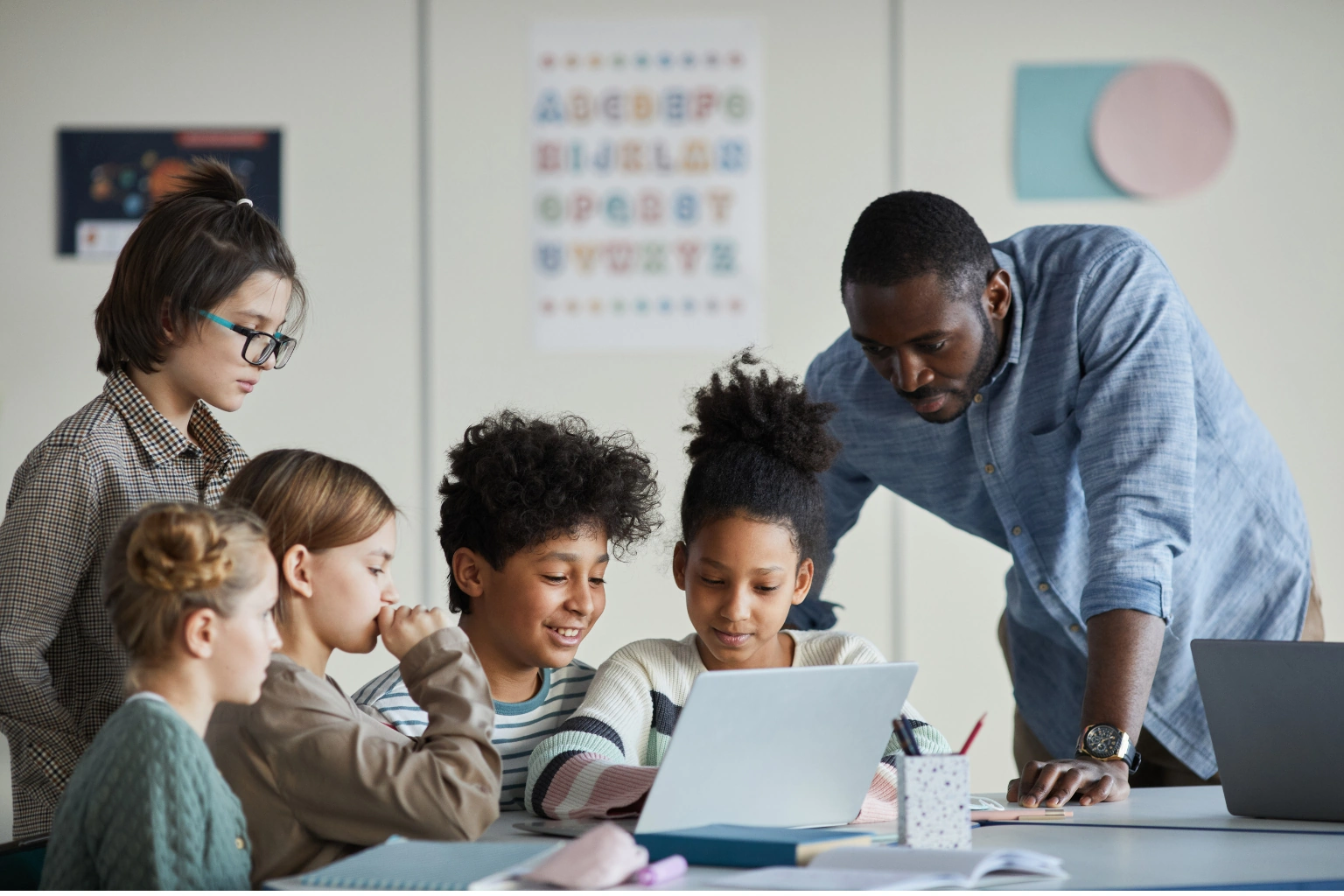
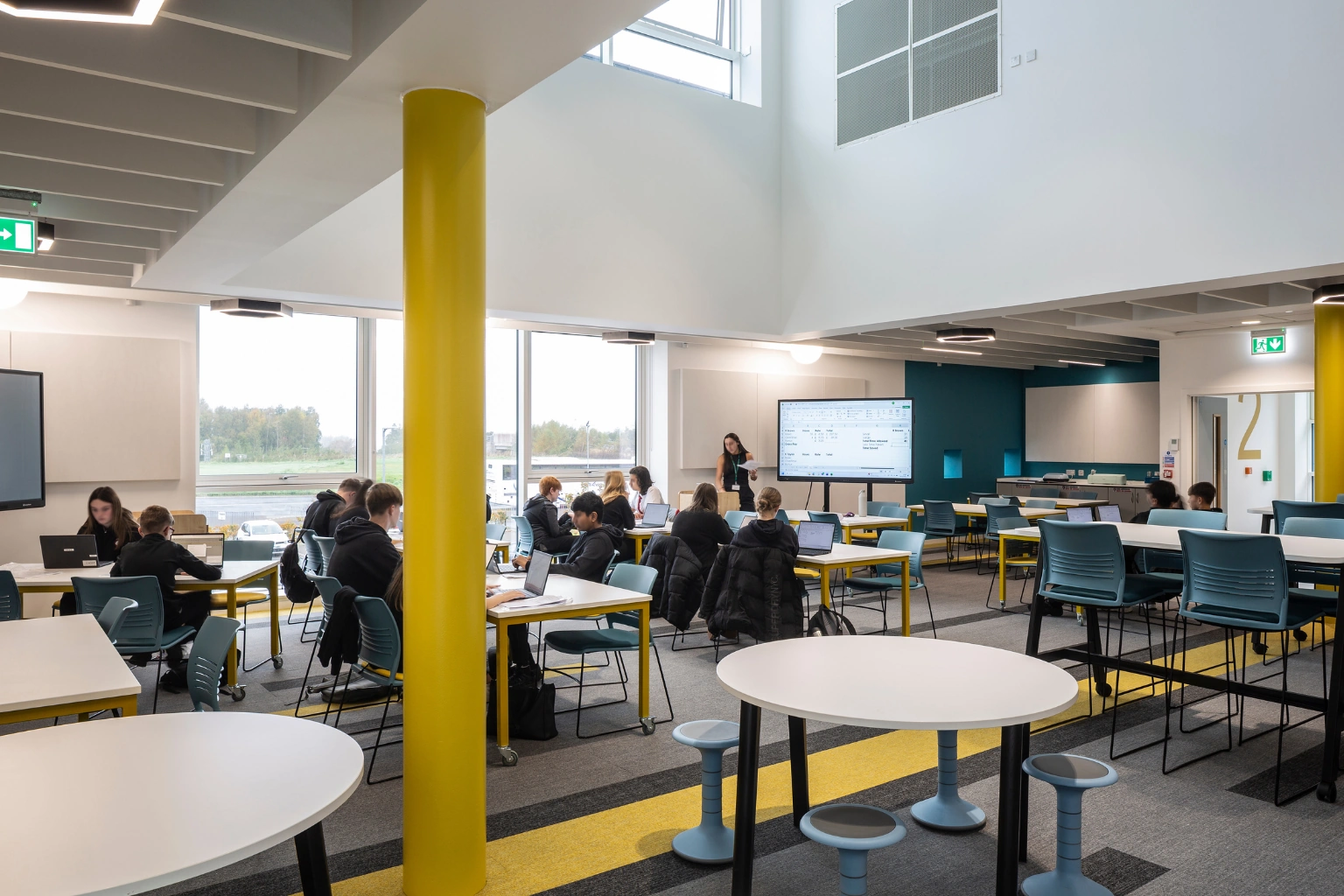
As AI becomes embedded alongside technologies such as augmented and virtual reality, Deji says schools will need to rethink layouts, acoustics, power infrastructure and zone planning so that spaces are flexible, tech-ready, and conducive to both collaboration and focus.
“You can’t just have rows of desks anymore,” he says. “Students might be moving through history, science, or even the universe. Classrooms need flexible spaces, properly wired for tech, with room for interaction.”
That has major implications for how learning environments are planned, from quiet areas for focused work, to collaborative zones, to adaptable spaces for immersive experiences.
We’re also seeing the rise of an “AI-native” generation of children who will grow up expecting intelligent tools at their fingertips, much like previous generations expected Wi-Fi.
“The expectation will be that these tools are available instantly,” Deji adds. “Schools have to be intentional about how they build for that.”
Designing for AI from the outset rather than retrofitting later is fast becoming a necessity.
West Calder High School
The need for safeguarding, truth and critical thinking with AI learning
But the opportunities come with risks, as Chloe points out. “It hasn’t been properly regulated,” she says. “There’s no guarantee that what’s being issued to students is going to meet safeguarding standards. There will be unconscious bias. There could be an agenda. Something will slip through.”
She is particularly concerned about the erosion of critical thinking. “With AI, we’re not learning to think for ourselves anymore. That’s a core skill. We need to be able to question things,” she says.
Deji points to the problem of so-called “hallucinations,” where AI confidently presents incorrect information as fact.
“In a school, a child probably isn’t going to challenge it,” he says. “That’s why you need a clear AI framework: what it can be used for, what it can’t, and how it’s monitored.”
He believes schools will increasingly need nominated AI leads, not necessarily new recruits, but empowered staff who understand the technology and can guide strategy, policy and safeguarding as tools evolve at speed.
“Safeguarding is going to be critical over the next few years,” he adds. “The pace of development is so fast that by the time you catch up, the tech has already moved on.”
The human element remains essential
In a world already grappling with misinformation and digital noise, Chloe says one truth stands out: empathy, nuance and professional judgement still belong to people, not machines.
“You won’t emotionally motivate someone through a screen,” she says. “You won’t replace reading facial cues. AI has no personality; it’s generic. It can do the donkey work, but humans have to do the real work.”
Deji agrees.
“It’s a tool. You still need people checking things, making changes, applying judgment. That goes for schools, too. It doesn’t mean fewer teachers, it means teachers focusing on the most important parts of teaching, while AI handles some of the admin.”
The human element remains essential
Preparing schools for what’s next
National guidance already stresses that AI should support and not replace educators, and that safety, data protection and curriculum alignment must come first.
But policy alone won’t deliver impact. Real preparation happens on the ground: in how classrooms are designed, how staff are supported, how children are safeguarded, and how technology is introduced with care.
AI may be the most significant shift education has seen in decades. But without thoughtful design, strong governance and human oversight, it also carries real risk.
Chloe sums it up: “It’s an exciting time, but we have to approach it carefully.”
For us, that means working closely with schools to think holistically about layouts, infrastructure and flow so that learning spaces evolve in harmony with pedagogy, technology and wellbeing.
Related Blogs and Whitepapers

Why investing in learning environments pays off
Clair Shaw MA • May 14, 2025

What can schools learn from modern office design?
Roger Thomson • January 27, 2026

How can schools better prepare young people for a rapidly changing world?
Claire Patey • May 29, 2026